
ECOWEEK 2026 ROMANIA
Sustainable Architecture for Health, Landscape and Community
Bucharest, Constanta and Eforie Sud, 6-12 July 2026
Theme:
Healing Spaces: Integrating Heritage and Park for Medical Rehabilitation and Balneotherapy in Eforie Sud, Romania
about
ECOWEEK : 21-years of international design sustainability and urban innovation.
Sustainable design in more than 30 cities in 18 countries around the world in more than 200 workshops on sustainable design,
with hundreds of placemaking and urban hands-on design-build interventions and design proposals that engaged more than 4500 students and young professionals in architecture and design and through public participation, engaged thousands of local stakeholders! Hundreds of expert speakers and leading keynote speakers to share, teach and inspire!
Explore the ECOWEEK resources:

overview
ECOWEEK 2026 is the second event in Romania. The first, in 2016, focused on the Victor Babes hospital in Bucharest, addressing issues of sustainable design and proposing landscape design schemes for ‘gardens that heal’.
ECOWEEK 2026 partners include the Faculty of Urban Planning, the Association of Architects (Romania), the Constanța County Council (Romania), Ecoama/ECOWEEK (Greece), NetHood (Switzerland), Univercity (Romania) and European Horizon Project SINCERE.
ECOWEEK 2026 addresses the relationship between architecture, landscape, health, circular economy and sustainability. Includes a series of interactive conferences with public discussions, lectures and keynote speakers open to the public, intensive architecture and landscape workshops, that will focus on sustainable design, urban planning and landscape design with the central theme of “Gardens and Public Spaces that Heal”. Engages the 'Talking Buildings' tool aiming to redefine the relationship of historic cultural heritage buildings with modern societies and contemporary cities.
ECOWEEK 2026 is a multidisciplinary event that invites the participation of post-doctorate, doctorate, graduate and undergraduate students and young professionals in Architecture, Engineering, Interior Design, Landscape Design, Agronomists, Medicine, History, Communication, and Media.


ECOWEEK 2026 site is the Recovery, Physical Medicine and Balneology Department of the “Sf. Apostol Andrei” County Emergency Hospital, Constanța. A 10-hectare land area, with abundant unplanned vegetation, and an architectural ensemble of significant historical and environmental value, dating from the beginning of c.20th.
The workshops will develop a project outline for a Balneotherapy and Medical Recovery Park, including the premises’ functional organization, volumetric, functional and architectural proposals, accessibility solutions and landscaping with a recreational as well as therapeutic role.
The project benefits from the interest and support of the Constanța County Council, being considered a preliminary study within the implementation of a model project for the modernization of medical rehabilitation and balneology infrastructure, and for the revitalization of the Eforie Sud resort, by recovering its history as the oldest resort on the Romanian Black Sea coast and preserving the local heritage.

The Eforie Sud resort dates back to 1894, when a sanatorium was built in the area, followed in 1899 by the first hotel between the seashore and the lakeshore, by the name Hotel Movila (today, Hotel Parc), and the Movila Baths (Baile Movila) on the shore of Lake Techirghiol. Between 1903 and 1906, around 50 hotels and villas were built between the sea and the lake, on the plot division sold by the Movila family.
The Movila-Techirghiol resort became officially a balneo-climatic resort in 1912, and developed significantly between the two world wars. For instance by 1938, approximately 500 villas, hotels, and residential houses had been built, enabling the resort to accommodate up to 20,000 visitors per season. In 1929 its name was changed to Carmen Sylva, and from 1962 to Eforie Sud.
At present on the Black Sea coast in the area of Lake Techirghiol, there are three spa resorts namely Eforie Sud, Eforie Nord and Techirghiol. On the lakeshore there is an outdoor treatment center for cold mud wraps, lake baths and climatotherapy, adding to the various spa hotels, sanatoria and the Recovery, Physical Medicine and Balneology Department of the “Sf. Apostol Andrei” County Emergency Hospital, Constanța.
Source: Constantin Cheramidoglu - Carmen Sylva, cea mai veche stațiune de pe litoral. Istoria Eforiei Sud Citește mai mult
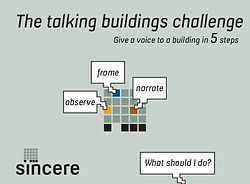
Developed by NETHOOD for the SINCERE Horizon program, the TalkingBuildings tool will enhance the workshop experience and redefine the relationship of historic buildings to their modern urban contexts.
The main assumption behind the SINCERE's TalkingBuildings tool is that the process of giving a voice to buildings can reveal important aspects of their condition and potential future. It produces also very playful and inspiring outcomes that can attract attention and stimulate creative engagement.
The TalkingBuildings tool invites participants to a. Observe carefully a building through all their senses; b. Choose a specific part of this building, and c. Narrate a story through its own perspective.
Until today the tool has been successfully tried out in Rhodes, Xanthi, Graz, and we will have the chance to further develop it. Our platform talkingbuildings.net collects the voices of all these buildings and provides a good starting point to understand the concept and contribute.
In Bucharest and Eforie Sud we will experiment with different observation prompts, framing scales, and storytelling mediums, and discover all together what the buildings and its parts have to say about the past, the present, and the future.

program
5.7 Bucharest Arrival
6.7 10:00 Opening session, orientation, workshops introduction, initial discussions. [1]
Welcoming remarks . Elias Messinas
The urban aspects of the workshops . Ileana Apostol
The healing gardens concept . Radu Negulescu
Short break 15'
Medical Campus and the city of Eforie . Cristina Iuliana Enache
Sustainable design in a nutshell . Elias Messinas
The 'talking buildings' tool . Panayotis Antoniadis
First Aid for Heritage: "The Ambulance for Monuments" . Veronica Răileanu
13:30 Lunch break on your own
15:00 Workshops meeting
16:00 Free-hand sketching group session outdoors
18:00 Free time
19:00 Get together group dinner [2]
7.7 Constanta Day-trip to Constanta and Eforie Sud for workshop project - select participation [3]
8.7 Bucharest 10:00 Parallel workshops in Bucharest [1]
16:00 Outdoor activity: sketching session or 'talking buildings'
9.7 10:00 Parallel workshops in Bucharest [1]
16:00 Outdoor activity: sketching session or 'talking buildings'
10.7 10:00 Parallel workshops in Bucharest [1]
16:00 Outdoor activity: sketching session or 'talking buildings'
11.7 10:00 Conference projects presentations, jury and discussion, lectures and Keynote Lecture [4]
Opening remarks . Elias Messinas
Workshop presentations and summary - Instructions [click]
13:00 Get together group lunch [4]
14:00 Keynote lecture . Panos Sakkas, The New Raw (The Netherlands)
15:00 Certificates & Evaluation
16:00 Closing
12.7 Departure
Venues:
[1] Bibliohub, UAUIM Biblioteca Universitara 'Ion Mincu' - Strada Academiei 18-20 Bucharest - map - location
[2] Sera Eden Bucuresti -- Strada C. A. Rosetti 37, 030167 București - map
[3] Constanta site visit.
[4] Casa Memoriala 'Ion Mincu' - Strada Pictor Arthur Verona 19 Bucharest - map

workshops
 |
|---|
 |
|---|
 |
 |
|---|
 |
 |
|---|
 |
 |
|---|
 |
|---|
 |
|---|
W1. Eforie Sud : The Double-Interface Landscape
Objective: Participants will carry out an integrated urban and environmental analysis of the Eforie Sud locality, and through scenario building will imagine some of its alternative urban futures, using ethnographic, sensory-based methods like perception walks, visual (and sound) recordings and cognitive mapping. The Eforie–Techirghiol region operates as a complex territorial system, with a distinctive configuration of an urban spa resort located simultaneously between the Black Sea coast and the therapeutic Lake Techirghiol. Its long-term sustainability depends on maintaining the balance between the interconnected systems of coastal tourism, spa-health infrastructure, ecological landscapes, heritage urban fabric and regional infrastructure.
Workshop Coordinator: Dr. Ileana Apostol, NetHood Zurich
Suitable to participants in the fields of: Urban Planning, Architecture, and Landscape Architecture.
W2. Lake and Sea
Objective: Remake what was once a continuous landscape of water, health, and movement, now divided by lines that cannot feel the place they cross. A green bridge becomes a statement : that continuity matters more than efficiency, that landscape is stronger than infrastructure, and that architecture can turn a barrier into a place of meaning. This project asks how architecture can transform a barrier into a place, and how a simple passage can become an act of healing.
To also confront distance and resistance. The project will explore the staircase as an instrument for overcoming the natural barrier of the cliff, transforming separation into connection. Placed between the hospital and the shoreline, the intervention proposes a continuous pedestrian path that mediates the transition between two contrasting levels and conditions. Rather than imposing a foreign object onto the landscape, the staircase follows the morphology of the terrain, becoming part of it: a line that shortens distance, eases movement, and reconnects places that were physically close but difficult to reach.
Workshop Coordinator: Dorin Ștefan - Prof. PhD Arch. and Radu Negulescu, Architect, Univercity Bucharest
Suitable to participants in the fields of: Architecture, Landscape Architecture, Agronomists and Medicine. Can engage and address aspects of engineering and placemaking.
W3. Transitional Urban Space : Interface between the City and the Medical Campus
Objective: Humanizing and redefining the entrance to the medical complex, by configuring a representative, accessible and user-oriented public space. Urban planning solutions will be explored that create a coherent transition between the city and the medical area, emphasizing identity, orientation and environmental comfort.
Workshop Coordinator: Cristina Enache – Prof. PhD Arch.
Workshop Team: Dr. Ubran Peis Andrada Eftime - at the Faculty of Urban Planning, "Ion Mincu" University of Architecture and Urban Planning Bucharest (UAUIM)
Suitable to participants in the fields of: Architecture, Urban planning, Landscape Architecture, Design, Communication, Media, Agronomists and Medicine. Can engage and address aspects of engineering and placemaking.
W4. Multisensory Therapeutic Garden : Ground Floor, Rooftop, Ambulatory Access Area
Objective: The proposal aims to create a multisensory therapeutic garden on the ground floor, in the access area to the outpatient clinic, within the main “access apparatus”. Aesthetic-compositional, plant elements, various sensory and olfactory textures, water and light elements and games through special decorative lighting, other elements related to the psychology of the built and planted space will be integrated, intended to support the recovery process and improve the experience of the patient, as well as the medical staff and visitors.
The theme also proposes transforming the roof into an accessible therapeutic space, contributing to the expansion of green areas and the improvement of the microclimate. Intensive green roof solutions, outdoor recovery trails and relaxation spaces adapted to users with reduced mobility will be analyzed.
Workshop Coordinator: Cerasella Crăciun - Prof. PhD Arch. and Cristina Enache – Prof. PhD Arch.
Workshop Team: Dr. Urban Peis Lavinia Luparu and Dr. Urban Peis Alexandra Dulvar - at the Faculty of Urban Planning, "Ion Mincu" University of Architecture and Urban Planning, Bucharest (UAUIM)
Suitable to participants in the fields of: Architecture, Urban planning, Landscape Architecture, Design, Communication, Media, Agronomists and Medicine. Can engage and address aspects of engineering and placemaking.
W [all]. Talking Buildings
When Cultural Heritage buildings tell their own story: an architectural and design project, with interior design, architectural, preservation and rehabilitation focus, that uses technology and storytelling to build contemporary narratives for cultural heritage buildings.
Workshop Intergration Coordinator: Panayotis Antoniadis, Nethood Zurich and Dr. Elias Messinas, ECOAMA-ECOWEEK
Suitable to all participants.
** Workshops may merge, depending on number of participants.
Free-hand Architectural Sketching
We design and discuss about Cultural Heritage but we also understand and appreciate it through observation and free-hand sketching. When machines learn how to think for - and instead of - us, we develop our abilities to see and think through free-hand sketching and understanding the urban context, perspective and the details and relationships of historic buildings. Bucharest and Constanta are amazing contexts to sketch buildings, landscapes, religious and other monuments, and a very rich texture of architecture and design. Interior and exterior.
Session Coordinator: Dr. Elias Messinas, ECOAMA-ECOWEEK - Suitable to all participants.
 |
|---|
 |
 |
 |
 |
 |
 |
Meet the Workshop Coordinators & Speakers:
Cerasella Craciun is an award-winning PhD architect, Professor at ”Ion Mincu'' University of Architecture and Urbanism in Bucharest. Co-author of “Landscape Architecture”, initiator of the Master’s Degree Program “Landscape and Territory”, former Vice-Dean of the Faculty of Urban Planning, Head of Urban and Landscape Design Department, coordinator of “Landscape Design and Planning” Bachelor’s Degree Program, initiator and Director of the “Landscape and Territory” Master Program at the Faculty of Urban Planning and author and co-author of 9 books, 22 book chapters and over 70 articles. Curator of exhibitions, coordinated workshops, research grants, studies and projects in landscape, urbanism, territorial management and urban planning, architectural projects, interior design, set design, jewel collections and fashion design. [web]
Ileana Apostol (PhD Planning, University of Southern California, Los Angeles) is a researcher of spatial production in the information age, co-founder of Zurich-based NetHood association, and co-initiator of the L200 space, a community-run "living lab" in Zurich. Has taught urban sociology at ETH Zurich, urban planning and design in Los Angeles at California Polytechnic University, and University of Southern California, and architecture and urbanism at the University of Architecture and Urbanism in Bucharest. [NETHOOD]
Radu Negulescu is an architect based in Bucharest, Romania. Radu is an associate architect at DOA basedin Romania.
Cristina Iuliana Enache is an award-winning PhD architect and urban planner focusing on sustainable urbanism, therapeutic landscapes, public spaces, and the relationship between technology, landscape, and the contemporary city. Professor at the “Ion Mincu” University of Architecture and Urbanism in Bucharest, former Head of the Department of Urban and Landscape Design, she is currently President of the Professional Commission of the Romanian Register of Urban Planners and official UAUIM representative within ECLAS – European Council of Landscape Architecture Schools. Coordinated numerous workshops, exhibitions, research projects, and international collaborations in architecture, urbanism, and landscape architecture, and is the author of publications on urban landscape and sustainable design.
Veronica Răileanu is a Romanian architect whose work focuses on cultural heritage, vernacular architecture, and rural communities. After graduating from Architecture School, she left Bucharest and moved to a village in the heart of Transylvania, where she coordinates the program "Ambulance for Monuments".
Panayotis Antoniadis is co-founder of NetHood, a Zurich-based non-profit association that combines research and action around a wide variety of participatory processes at the neighbourhood level. He has a highly interdisciplinary profile with senior researcher positions at ETH Zurich, research visits in top universities
like University of Southern California, Princeton, London School of Economics, and Cambridge, and key roles in the Internet Society Switzerland Chapter, and the L200 space in Zurich. In the Horizon Europe project SINCERE, he co-developed the TalkingBuildings methodology for community engagement around issues of preservation and sustainable renovation of cultural heritage buildings. [TalkingBuildings]
Elias Messinas is an architect, urban planner and the creator of ECOWEEK. Graduate of Yale School of Architecture, he practices, teaches and engages in research on cultural heritage buildings, sustainable design, and public participation in urban planning. Partner in the Horizon Europe project SINCERE on energy conservation in cultural heritage buildings. Author of 15 books and numerous articles, and project architect and coordinator of private and public projects in Greece and abroad. [ECOAMA] [ECOWEEK] [EliasBlue]
keynote
 |
|---|
 |
 |
 |
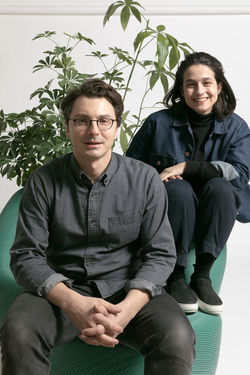
Panos Sakkas of The New Raw a Research & Design studio based in Rotterdam (NL), founded in 2015 by architects Panos Sakkas and Foteini Setaki - link to website
Panos Sakkas is an architect and designer working at the intersection of circular design, material innovation, and digital fabrication. He studied Architecture and Building Technology at the Technical Universities of Athens and Delft, focusing on how emerging technologies and sustainable materials can redefine the built environment.
In 2015, he co-founded The New Raw with architect Foteini Setaki. The Rotterdam-based research and design studio uses robotic 3D printing with recycled plastic to create products and public spaces that combine sustainability, craftsmanship, and social impact. Through its work, The New Raw explores new models for local production and circular material systems.
The New Raw works towards closing material cycles and strengthening local production, using an open and scale-less approach that is based on material research, digital design and fabrication. Since day one, The New Raw has focused on recycling plastic waste with the use of 3D printing. Their works range from research on marine and city plastic pollution to hyperlocal fabrication in refugee camps, from decentralized production on islands to plastic pollution and circular economy systems. Whether it is a client commission or a self-initiated research project, The New Raw pushes the boundaries of technological and social innovation.
The office collaborates with various organizations and institutions, including: Coca-Cola Greece, AMS Institute, Technical University of Delft, Hong Kong Design Institute, City of Amsterdam, Climate KIC, Aikaterini Laskaridis Foundation and others. Foteini and Panos are lecturers and directors of circular design workshops around the world. The work of The New Raw has been exhibited, published, and awarded internationally, including recognitions such as the Dezeen Design Award, Kaldewei Future Design Award and Hans Sauer Award.

registration
Registration to ECOWEEK 2026 is open to individual participants and group registrations (5 people and more).
Early Registration fee is 50 Euro for individuals and 30 Euro per participant for groups.
Registration fee reserves your place in the event only. It does not cover flight, transportation, local transportation, insurance (obligatory), accommodation, meals and all other accrued expenses, undertaken by each participant individually. Early Registration fee is low to make participation accessible to more participants, but it is non refundable. Early Registration extended to May 15, 2026.
Registration fee is 100 Euro for all participants - starting May16, 2026.
Registration fee reserves your place in the event only. It does not cover flight, transportation, local transportation, insurance (obligatory), accommodation, meals and all other accrued expenses, undertaken by each participant individually. Registration fee is low to make participation accessible to more participants, but it is non refundable.
Workshop places for ECOWEEK 2026 are very limited. Registration takes place in two steps:
1. You reserve your place here (in case of over-booking, the waiting list is based on first-come-first-serve basis upon cancelations).
2. We will confirm your participation by email and provide registration fee payment instructions.
Participation requirements: You are obliged to bring your own laptop and personal work tools at your responsibility. Travel insurance for foreign and local students is obligatory. Please read and accept the terms and conditions for participation to ECOWEEK 2026 in the registration form.
ECOWEEK 2026 workshops are suitable for students, young and established professionals in the disciplines of Architecture, Design, Landscape Architecture, Industrial Design, Planning, Visual Communication, Graphic Design, History, Media, Agronomists and Medicine. Students and/or professionals of other professions are also welcome to join and experience working in interdisciplinary teams. ECOWEEK activity is best for graduate or undergraduate students in second year or higher. Participation in the workshops requires a time commitment. Please allocate this time for yourself in order to be present and active in your workshop group. Specific instructions and guidelines for each group will be handed by the workshop coordinators.
Copyright ECOWEEK 2021
partners
 |
|---|
 |
|---|
 |
|---|
 |
|---|
 |
|---|
 |
|---|
 |
|---|
 |
|---|
 |
|---|
 |
|---|


